

By: Scott McCormick (CVTA)
Mobile DVR systems have long been used in tow trucks, ambulances, public safety vehicles, and fleet operations to capture video for liability protection and post-event review. These systems traditionally stored footage locally on hard drives or SD cards, requiring manual retrieval after incidents and offering limited real-time value.
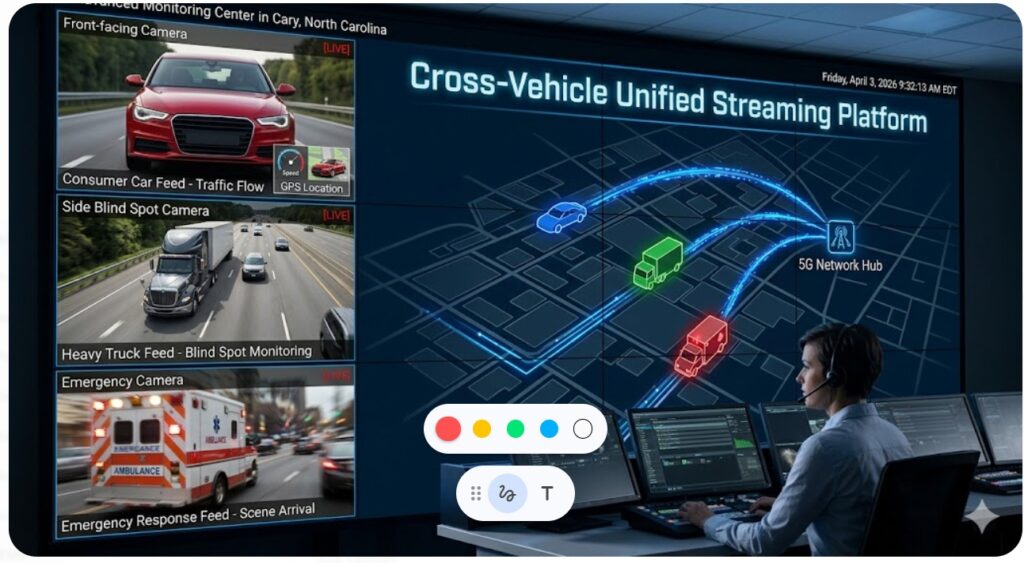
Today, connected vehicle video uploading is transforming these systems into real-time, cloud-connected intelligence platforms. Instead of simply recording events, modern systems automatically upload video clips, live streams, and event-triggered recordings over 4G/5G networks to centralized platforms, enabling immediate access by dispatch, safety teams, or insurers. This evolution mirrors the broader shift in media from static storage to dynamic streaming services.
Traditional Mobile DVR Architecture and Limitations
Legacy mobile DVR systems were built around a closed, vehicle-centric architecture consisting of cameras, a recording unit, and local storage. Accessing footage required physical retrieval, limiting responsiveness and scalability.
Key limitations included delayed access to video, lack of real-time situational awareness, minimal integration with cloud systems, and difficulty scaling across large fleets. For industries like emergency response and towing, these constraints created inefficiencies and increased operational risk.
The Rise of Connected Vehicle Video Uploading
Advances in 4G/5G connectivity, edge computing, and cloud platforms have enabled mobile DVR systems to evolve into connected video pipelines. These systems integrate cameras, telematics, and communication modules to capture, process, and transmit video in real time.
In addition to real-time cellular transmission, many systems now support hybrid upload models, where video is streamed live for critical events but bulk footage is uploaded via Wi-Fi when vehicles return to base. This approach balances bandwidth costs, network availability, and operational needs while enabling scalable deployment across fleets.
Live Streaming Video: A New Operational Model
Live streaming fundamentally changes how mobile DVR systems are used. Instead of reviewing footage after incidents, stakeholders can now monitor events as they happen.
This enables faster incident verification, remote monitoring, and immediate response during accidents, breakdowns, or emergency situations. Dispatch centers gain real-time visibility, improving coordination and decision-making. For ambulances, this supports better communication with hospitals; for tow operators, it enables real-time documentation; and for fleets, it enhances proactive safety management.
Integration with OTT and Streaming Media Systems
As mobile DVR systems evolve, they increasingly resemble OTT video platforms. Technologies such as adaptive bitrate streaming, cloud-based video processing, and low-latency delivery architectures are now applied to vehicle video systems.
Connected vehicles are becoming mobile video endpoints, creating new opportunities for streaming providers to extend their platforms into fleet operations, public safety, and mobility services. This convergence opens new markets for video ingestion, distribution, and analytics beyond traditional entertainment.
AI and Analytics: From Evidence to Intelligence
Continuous and event-based video uploading enables AI-driven analytics that transform video into actionable insights. Systems can detect risky driving behavior, reconstruct incidents, and trigger automated alerts in real time.
As President of the Connected Vehicle Trade Association and Chairman of Mobile Video Computing Solutions, I see this transition firsthand: mobile video is no longer just evidentiary—it is becoming operational infrastructure. Video is now used to drive decisions in real time, from roadside response to claims adjudication.
Business Models and Monetization Opportunities
The shift to connected video systems is creating new revenue opportunities across the ecosystem.
Emerging models include Video-as-a-Service (VaaS), insurance partnerships leveraging verified video data, and data monetization through analytics and insights. Fleet operators can also differentiate services by offering real-time video access and enhanced transparency to customers.
For OTT and streaming providers, this represents a significant expansion into enterprise and mobility markets, where video infrastructure becomes a core operational service.
Challenges and Considerations
Despite its advantages, connected vehicle video uploading introduces challenges. Bandwidth costs, privacy and compliance requirements, system complexity, and latency constraints must all be carefully managed.
The hybrid model of combining cellular and Wi-Fi uploads helps address cost concerns, while edge processing and selective video transmission reduce data load. However, organizations must also ensure accountability, transparency, and trust as video becomes a decision-making input rather than just a record.
Use Case Discovery and Future Opportunities
The evolution of mobile DVR systems is unlocking a wide range of new applications. AI and experience-driven development are enabling innovative use cases such as multi-sensor video integration (including infrared and LiDAR), vehicle-to-everything (V2X) video sharing, and trusted video verification systems.
Additional opportunities include compensating vehicle owners for sharing video data and enabling collaborative visibility across multiple vehicles to “see through” obstacles. Many practical and high-value applications are still emerging as the ecosystem evolves.

About Scott McCormick
Scott McCormick is the President of the Connected Vehicle Trade Association (CVTA). He has over 25 years of leadership and development experience in intelligent transportation systems, connected vehicle technologies, and mobility innovation.